Showing posts with label decking. Show all posts

Picturing a summery afternoon, sipping a cool drink as you back on your perfectly installed deck, conjures pure bliss, isn't it? But what if this dream oasis ends up uneven, unsightly, or unsafe? It's no secret that building a deck is a mammoth undertaking, blending design, craftsmanship, and architectural know-how. And while DIY tutorials and deck building guides are aplenty, the process comes studded with potential pitfalls. So, how can you avoid common decking installation mistakes to ensure flawless results?

This post will dive deeply into the top five most common decking installation mistakes. We'll explain why they're problematic, how to avoid them, and what you can do if they've already happened. We'll also discuss the pros and cons of DIY decking installation up against hiring a professional.

Stay tuned for some tips, tricks, and insights that, if adopted properly, will ensure your decking project will be smooth sailing, avoiding any choppy home improvement waters ahead. 
decking

Misjudging Materials Needed 

Our first cardinal mistake is not accurately estimating the quantity of materials required. This can lead to half-completed decks or unnecessary surplus supplies. The scope of measurement is vast - from the number of boards and screws to stains and sealants. An incorrect estimate can not only disrupt your project but also inflate your expenses.

Also, considering the environmental conditions and intended usage of the deck, the correct type of materials is crucial. Composite decking, for instance, may suit areas prone to harsh weather, while pressure-treated wood could serve as a cost-effective solution for a simple summer deck.

Failing to Plan 

An old saying goes, "If you fail to plan, you are planning to fail." The wisdom in these words permeates all spheres of life, decking installation included. Without proper planning, decks can end up too large, too small, or incompatible with the existing house design.

Unfortunately, many enthusiastic DIYers skip blueprinting the design, letting their ambitions steer the process haphazardly. It's crucial to thoroughly understand the dimensions, utilize space smartly, and decide on function-specific areas before commencing.

Overlooking Permit Requirements 

Decking installation may require specific permissions from local authorities or homeowner associations. Failing to obtain these permits may lead to your project being shut down, or even worse, hefty fines. The specifications and codes vary with location, so it's essential to research your local guidelines and abide by them. 

Neglecting Safety Measures 

Decks require structurally sound construction, and cutting corners on safety can lead to disastrous outcomes. Overloaded decks can collapse, causing severe injury or even fatalities. Key safety factors, such as strong footings, secure railings, and proper spacing between boards to facilitate water runoff, should not be compromised. 

Improper Spacing and Alignment 

Poorly spaced and misaligned deck boards not only mar the aesthetic appeal but can also impact the longevity and safety of the deck. An uneven deck is uncomfortable to use, and water puddling can lead to decay and rot.

Ensuring equal spacing and alignment requires patience, precision, and professional expertise. Whether you're a DIYer or hiring a contractor, this aspect cannot be overlooked. 

Forgoing Professional Intervention

The ultimate question lies - to DIY or not to DIY? Home improvement projects can be enticing, but it's essential to weigh your skill level, available time, and the complexity of the project. Bringing in professionals can assure quality work, safety, proper material usage, and adherence to regulations. 

Decking

Sidestepping the Slip-ups – Getting it Right 

Installing a deck is no mean feat; it's a hefty investment of both time and money. But just imagine - the satisfaction of seeing it flawlessly finished, ready for summer BBQs, and relaxing evenings. Blissful, isn't it? However, to transform this vision into reality, avoiding common installation mistakes is paramount. 

Remember, it's not only about getting the deck up but ensuring it stays up and safe. Accurate estimation of materials, meticulous planning, respecting permit regulations, prioritizing safety, getting the spacing right, and seeking professional help are the key points that can make or break your decking project.

As Hemingway said, "The only kind of writing is rewriting." So too can your decking installation be rewritten, corrected to sidestep these common mistakes. To seed success, let each misstep be a stepping stone to knowledge and improvement. With this guide in your arsenal, here's to laying the foundation of a stunning and sturdy deck, a labor of love that withstands all seasons and stands tall for years to come.
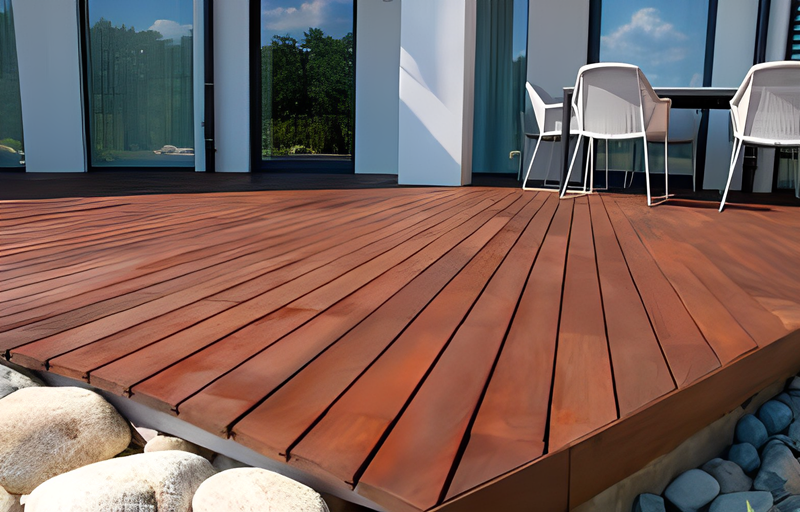
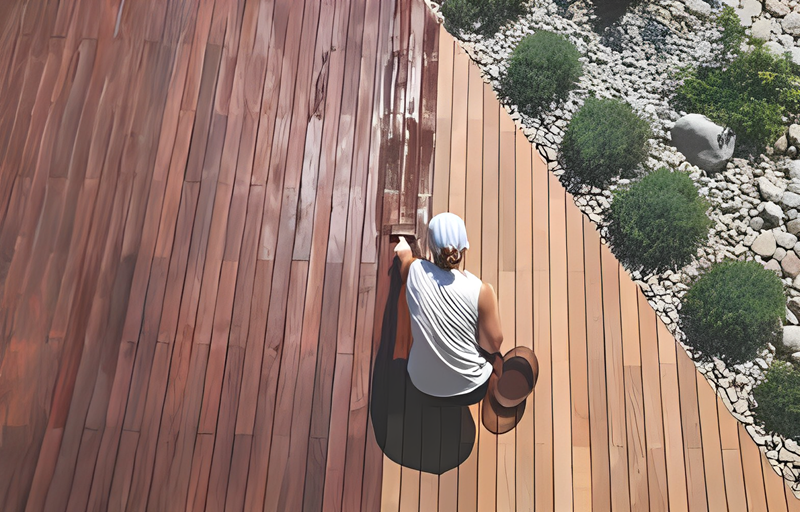
 

Have you ever gazed at a beautifully designed deck and thought, "I wish I could have one like this”? As more and more homeowners venture out of doors to reclaim their living space, decks are quickly becoming the star of the show. The heart of a great outdoor living space begins with the choice of decking material. With a myriad of decking materials out there, it can be quite an uphill climb to know what to pick. But what if I told you that choosing the right decking material doesn't have to be a daunting task? In this comprehensive guide, we will sail through the sea of decking materials to help you make an informed decision.

From the classic wooden deck that conjures up warm summer memories, to composite decking that offers high durability and low maintenance, let's cut through the clutter and find that perfect material for your outdoor sanctuary. As we delve into the characteristics, the pros and cons, accessibility, and affordability of various decking materials, stay with us to get the tools to build or upgrade your dream deck.

So, are you ready to embark on this journey to uncover the hidden gems of decking materials? Let's get on deck! 

decking

Why Your Choice of Decking Material Matters 

Your choice of decking material is like choosing the blueprint for your outdoor haven. To create a well-planned, specialized outdoor space, you need to understand the context, intended usage, and material compatibility with the overall aesthetic of your home. Choosing the wrong material can lead to unnecessary wear and tear, tarnish the look of your home, and even result in costlier repairs.

So, how to make the right decision? Crafting your perfect outdoor oasis starts with understanding what characterizes various materials. The right material will sync with your personal style, answer the call of local weather conditions, and will tick the box of longevity with minimum maintenance. 

To help you weigh the merits and demerits of each material, we will delve into the nitty-gritty of the most popular decking materials, making it easier for you to make an informed choice. After all, knowledge is power, right?

A Deep Dive into Wooden Decks 

Warm, natural, and classic are probably the first few words that would cross your mind when you hear 'wood decking.' For decades, wood has been the go-to material for decking due to its availability, versatility, and durability. Wood can be cut, shaped, and finished to meet any aesthetic requirement and, when well-maintained, can last for decades.

But, like all good things, wooden decks do come with their own set of challenges. They require regular maintenance, including annual weatherproofing to avoid warping and cracking. Durability can also vary widely based on the type of wood chosen, with hardwoods being more durable and costly than softwoods.

Finally, sustainability is a factor to consider. Although many types of wood are responsibly sourced, not all options are eco-friendly. Always choose wood from suppliers who ensure sustainable forestry practices to keep your deck green. 

Why Go for Composite Decks? 

Composite decking is a rising star in the decking world, providing a beautiful and durable alternative to traditional wood. Created by combining plastic and wood fiber, composite decks offer the appeal of natural wood without the hassle of high-maintenance.

The high quotient of durability and low maintenance needs are the primary reasons why homeowners are going gaga over composite decking. Built to last and resistant to fading, staining, scratching, and mold, these decks are designed to withstand the punishing Australian climate without the need for bi-annual weatherproofing unlike wood decks.

However, it comes with a higher upfront cost and lacks the completely organic feel of wood. But if you take into account the low maintenance needs in the long run, composite decks indeed offer a bang for the buck! 

The Allure of Aluminum Decks 

If you are searching for a modern, minimalist, and practically maintenance-free decking option, then aluminum could be your go-to choice. Aluminum decks are lightweight yet remarkably strong, resistant to rot, rust, and weather-related deterioration. They cool quickly, making them ideal for hot climates.

Despite these perks, aluminum decking comes with a few drawbacks. Its aesthetic appeal might not hark back to the warm and organic vibe of wood, making it a less popular choice for homeowners who prefer traditional deck styles. Also, the upfront costs are higher, but considering their longevity and minimal upkeep costs, aluminum decks are worth considering. 

Thinking Of Vinyl Decks? 

Last but not least, let's talk about the lovechild of affordability and durability - Vinyl Decking! With its exceptional resistance to water and humidity, vinyl decks are a great choice for homes near water bodies or in high-rainfall areas.

Available in a wide array of colors and patterns, they can offer a surprisingly good impersonation of wood but demand significantly less upkeep. The downside? Some cheaper vinyl decks can look overly synthetic and may become discolored over time.

decking 

Conclusion 

Your hunt for the perfect decking material should reflect your individual style, climatic conditions, maintenance capacity, and budget. Each decking material has its unique blend of pros and cons but ultimately, picking the right one boils down to personal preference.

Remember, your deck is an extension of your home, a space to unwind, entertain, and enjoy life outdoors. So, choose your decking with just as much care and thoughtfulness as any part of your home.

Whether you like the warmth and familiarity of a wooden deck, or the low maintenance of composite, the modernistic appeal of aluminum, or the water-resistant features of vinyl, we hope this guide has equipped you with the knowledge to make an informed choice. May your deck always be a place that fills you with joy and serves as your very own outdoor sanctuary. Happy decking!

Many house owners like to build decking at their homes, which are actually flat wooden platforms at the level of the ground floor that are attached to the main buildings or created as independent structures. The residents used these decking for outdoor seating and dining purposes, by placing chairs, tables, and couches on these raised platforms. As these are simple structures, the homeowners may choose to build the decking themselves, by using a safe and effective decking kit, containing varieties of important tools for accurate measurements, cutting the woods, and attaching them together.

Deck kit
Deck kit

Major tools included in any decking kit for creating a decking

  • Spade is needed for moving the soil aside while preparing the base for making a decking.
  • Brick trowel for making holes on the ground or concrete surface, for fixing the wooden base.
  • Different kinds of saws are the most important parts of a decking kit. These are used for cutting through the thick pieces of timbers, for preparing them to create the total decking; like jigsaw, circular saw, and panel saw.
  • Combi drill for making holes in the wood blocks for placing the screws.
  • Measurement tapes for measuring the wood blocks, to turn them into decking of desirable sizes.
  • Pencil for marking the measurements on the wooden blocks.
  • Coach screws and coach bolts of 8mm or 10mm diameter and varied lengths, according to the requirements.
  • Sandpaper for polishing the rough grains of the wood blocks.
  • Paints and suitable brushes to cover the wooden decking with coatings of paints.

Deck kit
Deck kit

Steps to follow for creating a decking at home with a decking kit

  • First of all, the place where the decking is supposed to be built is cleaned properly and made even, by using the spade and trowel.
  • Then measure the length, width, and height of the proposed decking, as per the requirements.
  • The base frame is created with accurately four pieces of timber, which are pre-drilled with the drilling machines and attached together with screws of suitable sizes.
  • Then this base frame is turned upside down and the required numbers of wooden or concrete joists are attached to the pre-drilled holes with screws. Repeat this procedure for making more base frames, as needed for making the decking.
  • The frames of the supporting legs of the decking are made by attaching these adjustable feet to the brackets with the batten screws.
  • Next, the four supporting leg frames are attached to the base frames that are turned upside, to fit perfectly on each corner of the decking, with the help of suitable screws chosen from the decking kit.
  • It is best to place a strong paver under each foot of the supporting leg frame, so that it does not sink into the soft soil of the garden. It will be a smart move to put the pavers in shallow trenches, to keep the base frame steady at the desired place.
  • Then, the base frames are placed one above another and every two base frames are clamped together and finely leveled with the help of a spirit level. Fix the two frames with six screws, two on each side for great stability.
  • The height of the decking can be increased or decreased with the help of a spanner and then these legs are finally fixed with locking nuts placed at the top of the feet.
  • Finally, fix the wooden panels of the decking above the pile of base frames and safely secure them, without allowing any gap in between these panels. If any extra wooden boards are needed to be fixed, they are secured with screws to the earlier placed ones.
You can paint the whole decking according to the color scheme of the house and the residents can enjoy a great time in the evenings.